When I started working for myself, I thought that running a successful engineering business was mostly about being good at engineering, finding clients, and delivering quality work.
I knew how to design roads, prepare drawings, work in Civil 3D, and solve technical problems. What I didn't know was how to build a company where I wouldn't have to do everything myself.
In the beginning, that wasn't much of a concern. I was working on projects, communicating with clients, preparing proposals, handling invoices, and looking for new opportunities. As the workload grew, I started bringing people into the business, which introduced a completely different set of responsibilities. Suddenly, I also had to think about hiring, training, managing projects, maintaining quality, and making sure everyone had enough work. I was still doing engineering work myself, but now I was also responsible for keeping the entire operation running.
At some point, I realized that although the company was growing, my days weren't getting any easier. Every new client meant more projects, more communication, more decisions, and more things requiring my attention. I was building a business, but I was also creating more work for myself.
I started to understand that being a good engineer and knowing how to grow an engineering company were two very different things.
A Book That Changed My Approach
Over the past few years, I've spent quite a bit of time learning about entrepreneurship, management, and how to build a business. None of this was something I had seriously studied before starting my company, and much of what I learned came from making mistakes and trying to figure out better ways of doing things.
One of the books that has influenced me the most is Buy Back Your Time by Dan Martell. I would genuinely recommend it to anyone running a business, particularly those who feel that everything depends on them personally.
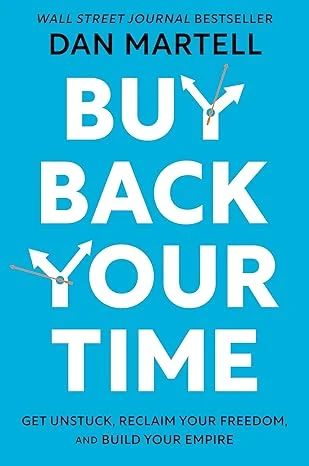
Among other things, Martell introduces a concept called the Replacement Ladder, which describes the order in which entrepreneurs should gradually transfer responsibilities to other people. The idea is that you shouldn't simply hire more people whenever you're overwhelmed. You should first understand which responsibilities are consuming your time and delegate them in an order that allows you to focus on increasingly valuable work.
He describes five steps: Administration, Delivery, Marketing, Sales, and Leadership.
The first step is to get help with administrative tasks, such as managing emails, schedules, documents, and other everyday activities. The second is delivery, which means building a team capable of providing your company's services without requiring your constant involvement. Once those functions are covered, the focus moves to marketing, then sales, and eventually leadership, where other people take responsibility for managing different parts of the business.
What I particularly liked about this concept was that it gave me a logical order to follow. Instead of constantly wondering what I should delegate next, I had a framework that made sense for the stage our company was at. It also helped me recognize that some of the difficulties I had experienced weren't necessarily unusual. They were simply part of trying to grow a business while remaining personally involved in too many activities.
I decided to start following this approach, and so far, it has worked well for us.
Today, we have administrative support, and we've built a team of 10 people who handle most of our engineering design and drafting production. I'm still closely involved in technical decisions, quality control, project coordination, and client relationships, but I no longer need to personally prepare every drawing or work on every Civil 3D model. That has allowed me to spend more time thinking about the company's future rather than focusing exclusively on the projects we need to deliver this week.
We're currently working on the third step, marketing. I'm learning how to create a more consistent process for reaching potential clients, developing our website, and communicating what we do, and we're starting to bring additional help into that part of the business.
There's still a long way to go, and I certainly wouldn't say that I've figured everything out. But I can already see the benefits of following this approach, and I intend to continue using it as we grow.
Why I Think This Applies to Small Engineering Firms
The more I thought about Martell's approach, the more I realized how relevant it is to the engineering firms we work with.
Many small civil engineering companies are founded by engineers who spent years working for someone else before deciding to start their own business. They're technically experienced, understand the local market, have relationships with clients, and know how to get projects through the design and permitting process. What they often don't have, at least in the beginning, is a team large enough to handle everything.
So they do what most entrepreneurs do. They take care of everything themselves.
They meet clients, visit project sites, prepare proposals, develop designs, work in Civil 3D, produce construction drawings, respond to review comments, coordinate with municipalities, and handle the administrative side of running the company. When they're busy delivering projects, they have less time to look for new opportunities. When the workload slows down, they start focusing on finding the next project.
This was exactly the situation I described in my first blog post, when I was trying to establish myself on the Serbian market. I could handle the engineering work, but I struggled to compete with larger firms that had more people available. They could pursue several opportunities at once, while I had to divide my time between finding work and completing it.
I believe many small engineering firms eventually face the same problem. Their technical capabilities are not necessarily what's holding them back. They might have the experience and client relationships needed to take on larger projects, but they simply don't have enough hours in the day to deliver everything.
And this is where I think Martell's second step, delivery, becomes particularly important.
At Some Point, You Have to Give Up the Drawings
I know this isn't easy for engineers, especially those who started their businesses by personally doing all the technical work.
After spending years developing your skills, you naturally want things done a certain way. You know how you want your drawings organized, which details need attention, how your Civil 3D models should be built, and what your clients and reviewing agencies expect. Giving that responsibility to someone else can be uncomfortable, particularly when you know you'll remain responsible for the final result.
Sometimes it genuinely feels easier to do the work yourself than to explain it, review it, and possibly correct it afterward. I've experienced that myself, both when I first started bringing people into our team and later when I had to learn to trust them with more responsibilities.
But there's a problem with that approach. If every project requires your personal involvement in every drawing, every profile, and every revision, then the amount of work your company can deliver is directly limited by the hours you have available.
You might become more efficient, improve your software skills, or work longer hours, but there's only so much one person can accomplish.
If your ambition is to remain a small practice where you personally handle most of the technical work, there's absolutely nothing wrong with that. Some engineers prefer it that way, and I understand why. Engineering is what brought most of us into this profession in the first place.
But if you want to build a larger company, take on more projects, develop relationships with more clients, and eventually spend more time managing the business, I believe you have to gradually step away from at least part of the production work.
The question then becomes whether you should build your own in-house production team or outsource that work to another company.
In-House or Outsourcing?
I don't think there's one answer that works for every engineering company, and I certainly wouldn't recommend outsourcing every position.
In fact, I believe there are several roles that make much more sense to keep in-house, particularly for firms working on land development projects.
Your professional engineers, project managers, and people responsible for developing client relationships are essential to the business. They're the ones who understand local regulations, communicate with clients and reviewing agencies, attend meetings, visit project sites when necessary, and make important engineering decisions. They also take professional responsibility for the designs, sign and seal drawings where required, and manage the permitting process.
These responsibilities are closely connected to the local market, your clients, and your professional obligations. Having experienced people in these positions within your own company provides significant value, and I believe that's where a growing engineering firm should invest much of its attention.
But when it comes to CAD production, I see things differently.
Does the person building your Civil 3D surface, preparing roadway profiles, drafting utility plans, developing grading models, or incorporating your redlines really need to be sitting in the same office as you?
In most cases, I don't think so.
This type of work can be performed remotely, provided the people doing it have the necessary technical knowledge, understand your standards, and communicate properly. Engineering firms already exchange drawings, models, markups, and other project documents digitally, so the physical location of the production team is often less important than its ability to deliver consistent results.
And that's where I believe outsourcing can offer several advantages over hiring additional full-time CAD designers.
Why Outsourcing Can Make Sense
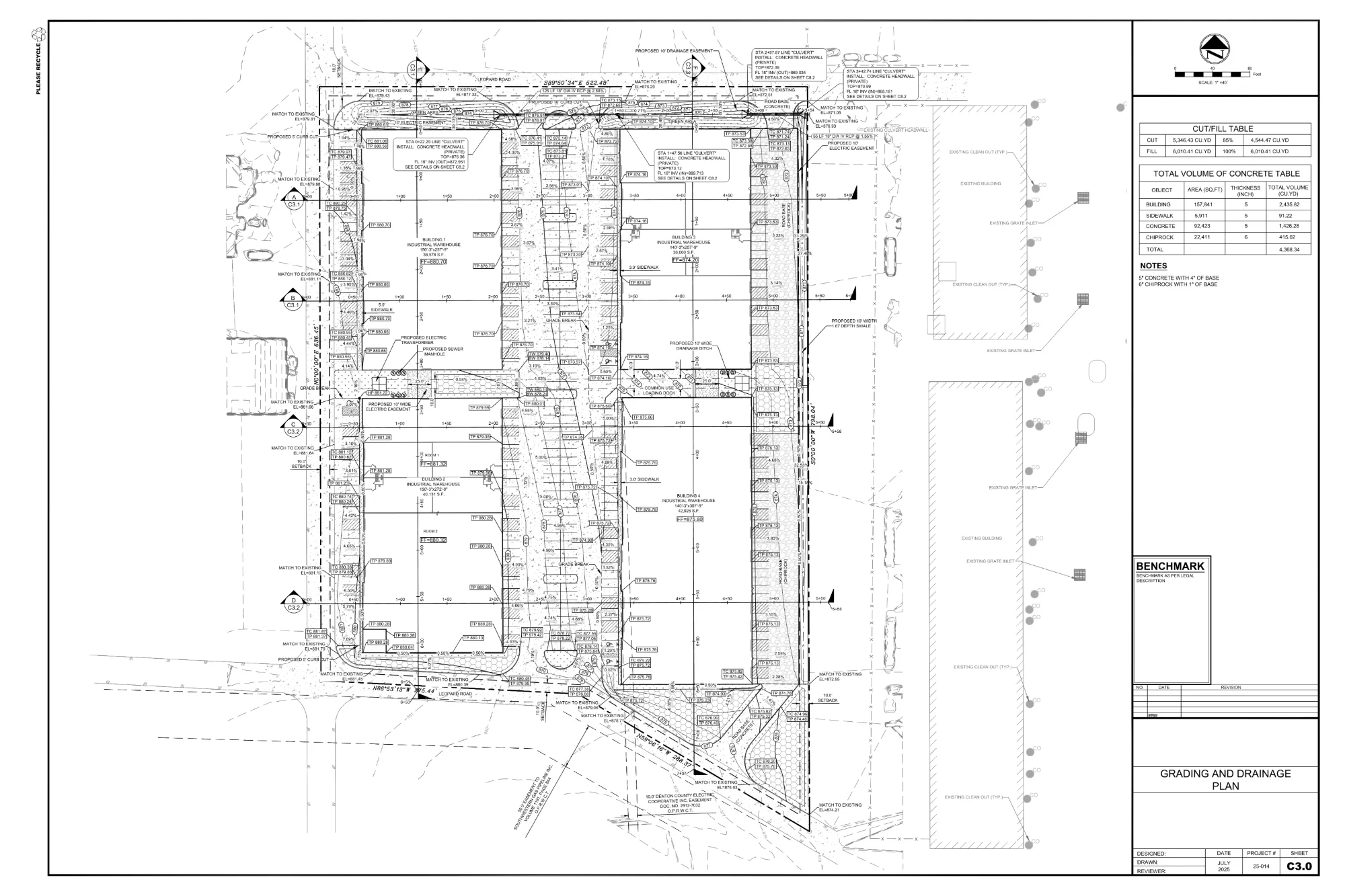
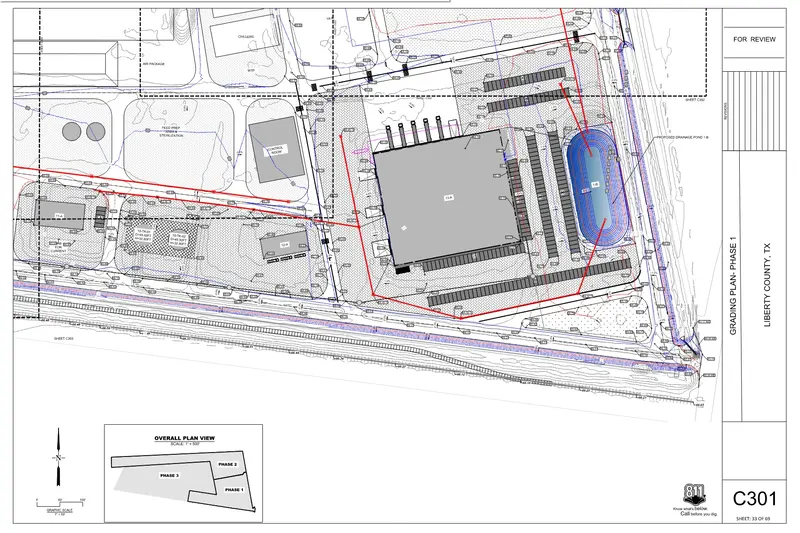
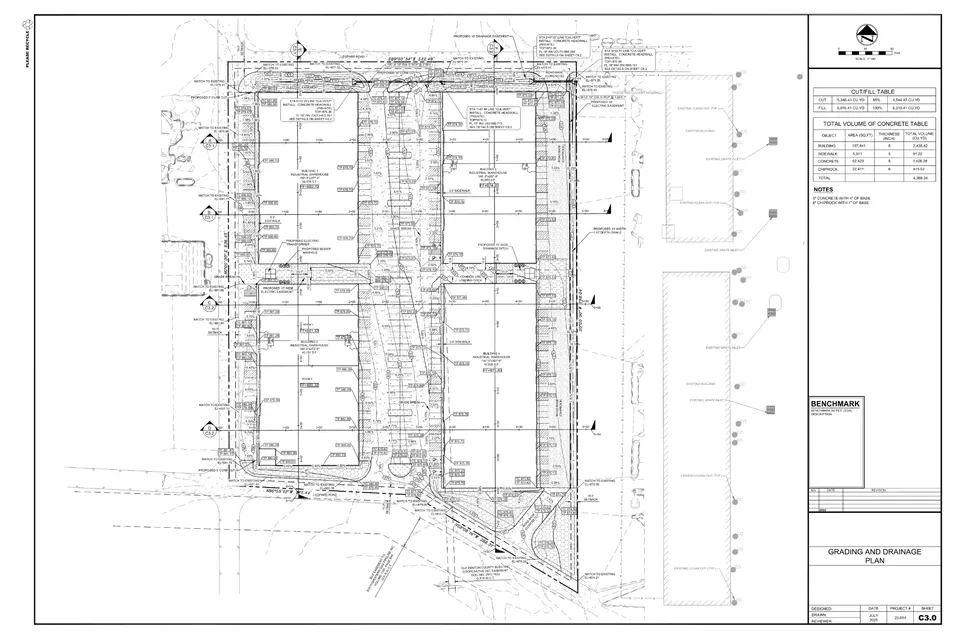
The first advantage is specialization. When you work with a company that focuses specifically on Civil 3D design and drafting, you're working with people who use these tools every day. At Civil Drafting, our team works on land development projects across the United States, preparing site plans, grading and drainage plans, utility layouts, roadway profiles, Civil 3D models, and complete drawing sets. Different projects bring different technical challenges, and that experience accumulates across the team.
The second advantage is flexibility, which I consider particularly important in land development. Workloads are rarely consistent throughout the year. You might have several projects starting at the same time, followed by weeks when you're waiting for surveys, client decisions, or review comments. Hiring full-time employees means taking on a long-term financial commitment, regardless of how much work is available at any particular moment. With an external production team, you can adjust the amount of support you need as your workload changes. When you have projects, you send them over. When things slow down, you aren't under pressure to find additional work just to keep everyone occupied.
The third advantage is scalability. Imagine you're running a small engineering firm with two or three people and suddenly receive an opportunity to work on a larger subdivision or commercial development. You have the engineering experience to manage the project, but you don't have enough people to produce all the drawings within the required schedule. Hiring several new employees might take months, and there's no guarantee you'll need that additional capacity once the project is completed. Working with an established external team could allow you to accept that opportunity without having to build an entire production department first.
Of course, outsourcing comes with its own challenges. Communication needs to be good, expectations need to be clear, and the external team must understand your standards and how you prefer to work. There's also an initial learning period, just as there would be with a new employee. And because the local engineering firm remains responsible for the final design, it needs to maintain proper oversight and quality control.
I don't believe outsourcing should be presented as a perfect solution that works immediately for everyone. Like any professional relationship, it takes some effort to establish. But when you find a reliable team that understands your work, I believe the benefits can extend well beyond simply having someone available to prepare drawings.
Finding the Right Balance
One thing I've learned through working with different U.S. engineering firms is that they don't all need the same type of support.
Some have experienced Civil 3D designers in-house and only need additional capacity when their workload increases. Others prefer to keep a small team of engineers and project managers while outsourcing most of their CAD production. We've also worked with firms where we effectively serve as their dedicated production team, working on projects as they come in and gradually becoming familiar with their standards and preferences.
I don't think any of these approaches is necessarily better than the others. The right arrangement depends on the firm's workload, financial situation, existing staff, and plans for growth.
What matters is that the company isn't unnecessarily limiting its own opportunities because the owner is personally responsible for too much of the production work.
I also think it's worth remembering that outsourcing doesn't have to be something you do only when you're overwhelmed. It can be part of your regular business model, allowing you to maintain a smaller in-house team while having access to additional production capacity whenever you need it.
And perhaps most importantly, the time you recover doesn't have to be spent working on even more drawings. You can use it to communicate with clients, pursue new projects, improve your internal processes, or simply spend less time working in the evenings and on weekends.
That, after all, is the idea behind Martell's book.
Growing Together
When we started Civil Drafting, my main goal was to provide civil engineering firms with reliable design and drafting support. I wanted to build a team that understood Civil 3D, could work with U.S. standards, and would become a dependable part of our clients' project delivery process.
As the company developed, I started to see our work from a slightly different perspective. We're not just helping engineering firms finish drawings. We're also giving their owners and engineers the opportunity to spend less time on production and more time on the things that can help their companies grow.
In a way, we're helping them take the same step I've been trying to take in my own business.
I don't think outsourcing CAD production will automatically make an engineering firm successful. There's much more to building a company than that, and I'm still learning plenty about it myself. But I do believe that having reliable people to handle production can remove one of the obstacles that prevent small engineering firms from growing.
In my first blog post, I mentioned something one of our earliest U.S. clients told me when his workload started increasing and he asked whether I could bring more people into the team.
"We can grow together."
That sentence played an important role in how I started thinking about Civil Drafting as a business, and I think it fits this topic particularly well. If our clients grow, they'll have more projects and need more support. If we can provide that support reliably, we can grow alongside them. It's a relationship where both sides have an interest in the other's success.
As for my own entrepreneurial journey, I'm currently working on the third step of Dan Martell's Replacement Ladder, with marketing being the next area where I want to gradually reduce my personal involvement. Sales and leadership are still ahead of me, and I'm sure there will be plenty more lessons to learn along the way.
If you're running your own engineering firm, I'd encourage you to read Buy Back Your Time. Even if you don't follow every recommendation, I think it's a useful book for anyone trying to build a business without remaining personally responsible for everything.
And if you find yourself spending most of your days working in Civil 3D while wishing you had more time to develop your company, perhaps it's worth thinking about which responsibilities you could start handing over.
Maybe the next step in growing your engineering firm isn't finding more projects.
Maybe it's finding the right people to help you deliver them.
 Dušan Dimitrijević Read more →