I Went to the U.S. Looking for an Engineering Opportunity. Years Later, I Found a Better Way.
 Dušan Dimitrijević 8 min read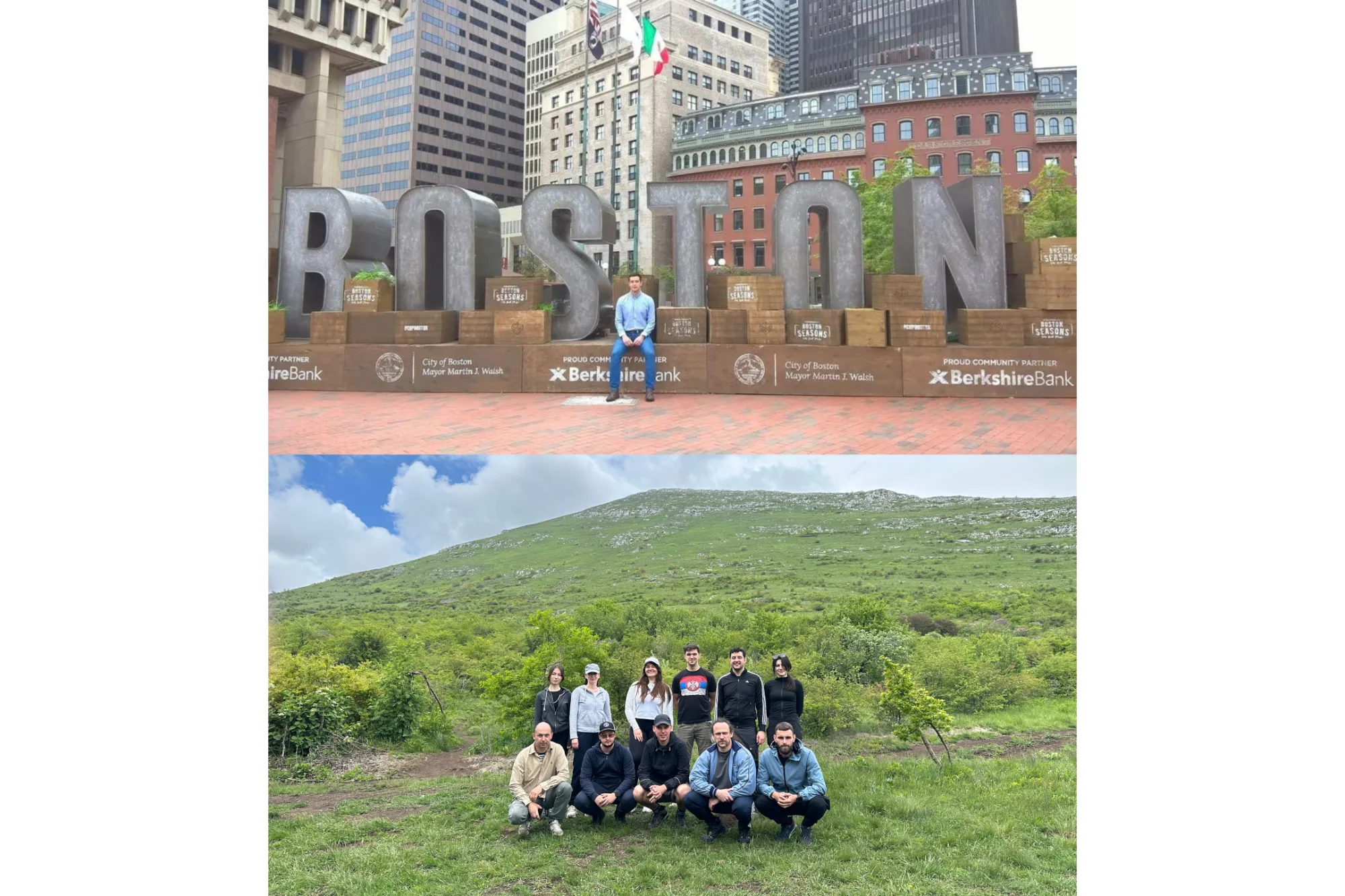
In 2017, I went to the United States with a fairly simple idea. I wanted to meet a civil engineering company there, prove that I could be useful, and eventually work with them from Serbia.
Three years earlier, I had graduated from the Faculty of Civil Engineering in Niš, specializing in roads and transportation infrastructure, and joined a local engineering company. It was a good place to start, but I quickly realized it wasn't what I wanted long term. I wanted to work on larger projects, use modern engineering software, work with people from different countries and see how engineering was done outside of Serbia. The country that interested me most was the United States, where cities grow outward: roads, subdivisions, commercial sites, utilities, drainage. To me, that meant opportunity for a civil engineer.
The idea itself wasn't necessarily wrong. The execution was.
Trying to Find My Place in the U.S.
I thought that being physically present would make it easier to meet an engineering company and build a relationship that could later continue remotely. So in 2017 I traveled to Massachusetts through a Work & Travel program. I spent around five months there, mostly on Martha's Vineyard, working in a clothing store and restaurants and carrying luggage. Meanwhile, I sent applications, contacted companies and visited a few engineering offices. Eventually, I got one interview. It didn't lead anywhere.
Looking back, that isn't surprising. I had limited experience, very little knowledge of the software U.S. firms use, no understanding of U.S. standards or of what a typical land development plan set looks like, and no professional network. More importantly, I didn't have a clear offer. I hadn't figured out what problem I could solve for them or why they should trust someone on the other side of the world with their projects.
Those five months still gave me something valuable: a much better feel for how hard-working U.S. professionals think. Be dependable. Do what you said you would do. Communicate clearly. Respect other people's time. Take responsibility for your work. Years later, those things became an important part of how I approached U.S. clients.
Back in Serbia
After returning home, I finished my second master's degree, obtained my Serbian professional engineering license and started trying to build something of my own on the local market. That taught me a few more lessons.
The first was that, as one engineer working mostly by myself, it was extremely difficult to compete for larger projects. The larger companies had teams. They could pursue several opportunities at once, handle bigger workloads and absorb the natural ups and downs of project work. I couldn't.
The second was that I never had enough bandwidth to deliver projects and keep the pipeline full at the same time. When I had work, I had to focus on delivering it. When I finished, I had to start looking for the next one. Find work, do the work, finish the work, then realize there was nothing waiting behind it.
The third was that hiring wasn't an easy answer. You may not have enough consistent work to justify hiring several full-time employees, but when a busy period comes, you suddenly need those people immediately. Hiring takes time, good people are difficult to find and workloads fluctuate.
Learning the Tools
In my spare time, I researched software for road design, and that led me to Autodesk Civil 3D. I taught myself, spending countless hours solving problems, reading forums and trying different ways of building models and drawings. Over time, it became one of my strongest professional skills.
Through those forums I met Miloš, a surveyor from Niš who knew the software extremely well. We got along immediately. Surveying and civil infrastructure design naturally overlap. A survey is the foundation for a civil project, and good coordination between the survey and design sides can make the entire process easier, so working together was a logical move. We started through separate self-employed businesses, and in 2022 we formally established InfraTech.
If Software Developers Can Do It, Why Can't Civil Engineers?
Several friends from high school had gone into software development and were working from Serbia for companies abroad, including in the U.S. That made me question one of my own assumptions. Why couldn't civil engineering work the same way?
I was highly proficient in Civil 3D, which U.S. firms widely use, and files and meetings could easily move online. I knew there was still a gap: I understood Serbian standards, but not U.S. standards or what U.S. engineers expect in their drawings. That would have to be learned on real projects.
I also understood that we wouldn't have a U.S. firm or U.S. licenses, so the U.S. engineering firm would remain responsible for local engineering decisions, project oversight and final deliverables. But that still left a huge amount of design and production work where we could help, and it could all be done remotely: Civil 3D production, site plans, grading, drainage, utilities, profiles, details, revisions and plan sets. That work could be done from Niš.
Finding the First Client
I started looking at freelance platforms, particularly Upwork. It wasn't easy, and I understood early that competing on price wasn't sustainable. There will always be another country with a lower cost of living and someone willing to charge less. I needed to compete on quality, engineering understanding, reliability and communication.
In 2021, I found Michael. He had started his own civil engineering company, MES, and needed support with land development work. The first assignments were site plans, grading plans and other Civil 3D production. The projects went well, and then there were more. Project by project, comment by comment, I learned how U.S. plan sets are structured, what engineers expect to see and how much standards vary between states, counties, cities and reviewing agencies. The software gave me the ability to do the work. The projects taught me how it needed to be done in the U.S.
When the workload grew, Michael asked whether I could bring in more people because larger projects were coming. One phrase from that period has stayed with me: "We can grow together." He was a young engineer building his company in the U.S., and I was an engineer building mine in Serbia. His growth could create opportunities for us, and our support could give him the capacity to pursue bigger projects. That was the point where I started seeing this as more than a freelance arrangement. It could be a business model.
There Had to Be More Firms Like His
Michael wasn't the only small firm dealing with this. Small engineering companies can be extremely capable technically, but the problem is often bandwidth. A small firm may be fully capable of winning and managing a larger project, but still struggle to take it on because there aren't enough people to produce the work. Michael had tried outsourcing before and told me about the problems he experienced, including high staff turnover and inconsistent service. That made the opportunity even clearer to me. There had to be other firms like his, and if I could help them, this could be a business built around many clients, not just one.
From One Engineer to a Team
In 2022, we hired our first team member because of the growing U.S. workload. Then another, and another. As the team grew, I realized that technical knowledge alone wasn't enough. I had to learn how a business works: how to hire and train people, organize projects, manage capacity and, eventually, how to market a company. With this new knowledge I realised our original InfraTech website no longer explained this new service clearly enough, so we created Civil Drafting as a dedicated brand of InfraTech, with its own website, focused on helping civil engineering firms expand their design and production capacity.
As I write this in 2026, that idea has become a team of 10 people focused on design and drafting for U.S. land development projects. We have delivered 300+ projects for more than 50 U.S. civil engineering firms across more than 20 states, and many of them have come back with project after project. For several, we are effectively their only dedicated CAD production team. Since that first U.S. assignment in 2021, we have billed more than $1 million in design and drafting services.
The idea had been there in 2017. I just didn't yet have the experience, the software skills, the knowledge of U.S. projects or the right way to execute it. Technology made the relationship possible, but the work has to be good, the communication has to be good, and the people on the other side have to trust you.
I want Civil Drafting to be the first production partner a small or growing civil engineering firm thinks of when it needs more capacity, one that helps them say yes to more opportunities instead of turning work away. And I don't want us to lose the personal side as we grow. I want our clients to know the people supporting their projects, and I want our team to understand the firms they support. A large part of this company started with two young business owners on opposite sides of the world realizing: we can grow together. That idea still describes what I want Civil Drafting to be.
And we're still just getting started.
Is your firm turning down good projects because there aren't enough people to produce them? If so, we'd like to hear about it.
Ready to discuss your project?
Tell us about your design, drafting, plan set production, modeling, or visualization needs, and we will respond within one business day with a scope and pricing estimate.